Sunday, November 24, 2013

Absence of Underwear

At Old Ivy College, admission is certain but graduation anything but. Each student must pass a set of rigorous -- some would say sadistic -- exams, and do a public presentation: a lecture, music recital, art exhibition or some other contribution to the public domain. Students begin early; to succeed in the fourth year presentation, one must practice, practice, practice. There are ample opportunities for students to speak, publish, perform and exhibit.

Today, in Joseph Wharton Hall, Roderick presents a paper to the Old Ivy Political Economy Club. A note on the venue: Old Ivy College has no affiliation whatsoever to Joseph Wharton or the Wharton School of the University of Pennsylvania. The Trustees of Old Ivy simply thought Wharton was a smart fellow, and dedicated the Political Economy building to his memory. On his way to the lecture hall, Roderick pauses to read a plaque in the lobby:
Wharton lobbied successfully in Washington, D.C. for tariff laws protecting U.S. manufacturing. He was a defender of large business and evolved into a staunch Republican. He successfully lobbied for the use of nickel in the U.S. coinage, but his lobbying for nickel tariffs was only partially successful, probably because he had a virtual monopoly on production in the U.S.

Wharton became widely known as a leader of the Industrial League of manufacturing concerns, and the main lobbyist and President of the American Iron and Steel Institute. Wharton successfully lobbied for a bill in the Pennsylvania General Assembly supporting Limited Partnerships to allow more participation of capital in enterprises with risk.

Wharton wrote extensively on economic matters, including protective tariffs and business cycles. In 1881 Wharton donated $100,000 to the University of Pennsylvania to found a "School of Finance and Economy" for this purpose. He specified that the Wharton School faculty advocate economic protectionism, as he had when lobbying for American businesses in Washington.
"Wow," thinks Roderick, "an exemplar of rent-seeking."

The lecture hall is packed. Roderick prepares his notes backstage while Lily Chang addresses the crowd with a few announcements.

"Now it's time for today's paper. I would like to introduce Roderick Smith, second-year student, who will deliver Part One of his paper on "How to Fix Health Insurance."

Roderick steps onstage and shakes hands with each of the three panelists, officers of the Old Ivy Political Economy Club, who are seated to the right of the podium. Last, he shakes hands with Lily, who wears a stunningly low-cut yellow dress.

"I'm not wearing any underwear. See me afterwards," she whispers as he drops his notes on the podium. Roderick thinks about what he's doing after the presentation: some logic problems, help Molly with Rhetoric, study for the Political Economy test, call Mom and Dad, call Mr. Smiley, visit Megan. Lily's lack of underwear is intriguing, to say the least, but so much to do, so little time.

He taps the mike. "Hello!

"Today I'm going to talk about how to fix health insurance. To begin with, I'd like to stipulate two things: I don't know a thing about how to prevent disease, cure the sick, help people live longer lives or improve life expectancy, which is the ultimate end of health care. This is simply a discussion about health insurance, or how to pool risks and pay for health and medical treatments.

"The second thing I'd like to stipulate is that while we conventionally speak about health care as if it is a single class of goods and services, it is actually several different sets.

"The first class of goods and services I will call urgent care: that which is necessary to keep someone alive. This includes such things as treatment for gunshot wounds, victims of natural disasters, terrorism and the like, as well as treatment for medical emergencies such as heart attacks, strokes and so forth.

"The second class of goods and services I will call medically necessary care: treatment that is medically necessary to cure or ameliorate a defined condition, but does not need to be applied immediately to save the patient's life. An example of this would be a surgical procedure to clear partially blocked arteries; the patient's long-term survival depends on having this surgery, but there is some discretion about when to schedule it.

"The third class of goods and services I will call discretionary care. This includes a range of medical treatments, from cataract surgery to hip replacement, that improves the quality of life for the patient, but the patient can live without it.

"In public discourse, it's customary for advocates of a government role in health care to speak about market failure in health care, and to lump all health care goods and services together and treat the entire category as a public good.

"Now I grant that it's difficult to speak of a market for emergency services. When you're hit by a car, you don't ask the ambulance driver to check prices at several hospitals before choosing where to take you. Arguably, there is a public interest in not having patients bleed to death just outside the emergency room simply because they don't have insurance. In any case, it's a matter of settled Federal law that emergency rooms must treat all patients, insured or not, including non-citizens.

"At the other extreme, purely discretionary care, there is a robust market for treatment such as laser eye surgery, plastic surgery, sports medicine, and so forth. These treatments are rarely covered by health insurance, but providers compete aggressively for business and prices are relatively low.

"Even in the middle ground of treatment that is medically necessary but not urgent, the experience of the Amish -- who have a religious objection to insurance -- shows us that it is certainly possible for groups to shop around for medical treatment and negotiate aggressive prices.

"So the first thing we need to do when we think about solutions is to stop talking about treatment for gunshot wounds and sex change operations as if they are the same thing.

"Next week I'll talk about solutions." Roderick steps away from the podium, to generous applause.

Later that evening, Roderick snuggles against Molly, and thinks about Lily with no underwear. He rarely thinks of Molly with no underwear, because she never wears any.

Sunday, November 17, 2013

Parking Lot

Today is the twenty-fifth Sunday after Trinity; for services at Saint Cecilia Chapel, the Old Ivy Bach Chorale performs the J.S.Bach cantata BWV 116 Du Friedefürst, Herr Jesu Christ ("Thou Prince of Peace, Lord Jesus Christ"). Amy Scharf sings the Soprano aria, Mrs. Dowager sings the Alto, one of the ringers sings the Tenor and Zack sings the Bass while fondling Amy's buttocks.

Mr. Fletcher of the Theology faculty delivers today's inspirational message, the subject of which is "Twenty-Fifth Sunday of Trinity: Just Counting Down Days to the Holidays." He steps to the lectern and clears his throat.

"Today is the twenty-fifth Sunday after Trinity, a day which holds absolutely no significance in the liturgical calendar, except that it follows the twenty-fourth Sunday after Trinity and precedes the twenty-sixth Sunday after Trinity. In some years, the twenty-fifth Sunday after Trinity is the last Sunday before Advent, but not this year.

"So I have nothing to say today.

"Coffee and doughnuts will be served in the foyer."

Mr. Pipes closes the service with a rousing organ postlude.

In the foyer, Roderick and Molly help themselves to doughnuts and coffee. Molly takes two doughnuts -- as you may know, Molly is always hungry and eats large amounts of food but somehow remains slender and svelte. Roderick takes a jelly doughnut.

"How's yours?" he asks, taking a large bite with lots of jelly.

Molly bites into her cream doughnut. "Mmmmmmmmmph," she says.

After services, Roderick and Molly part ways -- Molly heads to the Conservatory to work on the Ives Concord Sonata, while Roderick proceeds to the Ballroom for a meeting of Old Ivy Republicans. (Old Ivy Democrats meet at a table for four in the cafeteria).

Lily Chang stands at the entrance to the Ballroom; she's wearing a daringly tight and low-cut black dress. As Roderick enters the Ballroom, she beckons. "Can I speak with you for a minute?"

"Um, OK." Roderick lets Lily lead him into one of the private offices next to the Ballroom.

The door slams behind them, and Lily embraces Roderick, rubbing his groin. "I want this!" she hisses.

Roderick unwinds himself. "Um, maybe later." Roderick really wants to hear what Mr. Parvelescu has to say today. He exits the office and secures a seat in the front row. Lily follows and occupies the seat next to him.

Today's forum is typical for Mr. Parvelescu; he has no prepared remarks, but will respond to questions from students selected at random. The first questioner today is Katie Summersbee, third year Political Economy student.

"In the wake of the recent issues with the Obamacare rollout, can President Obama restore his credibility?"

"No."

The next questioner is Roger Fauntleroy, fourth year History of Banking: "What is the probability that Democrats will win back the House in 2014?"

"Zero."

Next up: Roderick. "Can the Republicans win back the Senate in 2014?"

Mr. Parvelescu has to ponder this one. "As things stand today, they're three seats short of a majority. West Virginia, South Dakota and Montana all look like pickups for the Republicans. To gain control, they must win the "toss-ups" seats currently held by Democrats -- Alaska and Arkansas -- and convert at least one of those currently "leaning" Democrat. That includes North Carolina, Louisiana, Michigan and Iowa."

"Follow-up question: how can the Republicans accomplish that?"

"Don't nominate morons."

In the next section of today's forum, Lily Chang reads from a list of prospective 2016 Presidential candidates and Mr. Parvelescu comments. Lily stands up, sorts through some index cards, then reads aloud from the first:

"John Kasich."

"Boring. Might not carry his own state."

"Rick Perry."

"Good track record as governor of a big state, terrible 2012 campaign. Voters have short memories, with some polish and coaching, he can re-introduce himself. I am available at my usual fee."

"Paul Ryan."

"Kind of wonkish. Effective as House Budget chair, which is an entirely different kind of job. Couldn't carry Wisconsin for Romney."

"Bobby Jindal."

"Helps with the Indian-American vote. Terrible speaker."

"Rick Santorum."

"Please."

"Ted Cruz."

"No way a first term Senator can win the Presidency. Oh, wait..."

"Marco Rubio."

"Over-rated and incoherent."

"Rand Paul."

"I like him. Not sure that Americans are ready for his Libertarian streak, but time will tell."

"Scott Walker."

"Likable guy, good Q factor. Something of a fifty-one percenter, wins by the skin of his teeth. Doing good things in Wisconsin, but I'm not sure how he plays on a national stage."

"Chris Christie."

"Kind of a gasbag, but the Presidency is mostly gasbaggery. Good "man on the street" appeal, virtually impossible for Dems to demonize him as a rich guy the way they did with Romney. Good streetfighter."

"Thank you, Mr. Parvelescu."

Meanwhile, in Pacific City, Mr. Smith checks in at the Acrophilia Suites. His first choice, the local Unique Hotel, is sold out this week.

"Thank you for staying at the Acrophilia Suites Mr. Smith. Here's your room key, and the elevator is over there." The desk clerk points over Mr. Smith's shoulder.

Trailing his roll-on overnight bag, Mr. Smith steps into the "bubble" elevator. "Yoicks," he thinks. He checks the little card they gave him at the front desk. Top floor.

The elevator rises rapidly, exposing a grand atrium surrounded by suites accessed by catwalks. Mr. Smith presses himself against the elevator door.


Stepping out onto the catwalk, he creeps towards his room at the far end, pressing himself as close to the wall as possible, averting his eyes from the precipitous drop to the atrium floor. "Eep,"he thinks.

Finally, Mr. Smith reaches his room, unlocks the door, drags his suitcase inside and exhales. In the bedroom, he draws the curtains aside to check the view. Is it a view of the Pacific, as advertised? Nope. Parking lot.

Sunday, November 10, 2013

The Concert

"Whatcha doing?" asks Megan.

"Nothing." Roderick is, in fact, doing nothing. Currently, he is stretched out on his bed, hands behind his head, sitting up slightly.

Megan is nude, as is often the case when she visits Roderick. She checks herself in the mirror. "Do you think I'm fat?"

Roderick understands this to be a trick question. "No, not at all" he says. This answer is at least partially honest; Megan certainly is not obese, nor even plump, nor zaftig. On the other hand, she's not svelte and catlike, like Molly,

"Really?" says Megan, curling up next to Roderick and doing her best to get some attention.

"Yes, really." Roderick hates it when people demand his attention.

"So, um, did you and Molly do, you know, it, over the summer?"

"No, we still have nineteen months to go before we hit the deadline." Roderick doesn't ask what or who Megan did this summer, knowing full well that she most likely did everyone in sight.

"I did it with the entire Baritone section of the Lake City Opera."

"All at once?"

Megan frowns. "No, sequentially. I'm not a slut, you know."

"Not that there's anything wrong with that."

"No, there's nothing wrong with it." Megan is President of the Old Ivy Ladies' Shooting Society, known colloquially as "Sluts with Glocks".


Roderick is curious. "Who else did you do this summer?"

"All of the straight male summer interns at Lake City Opera."

"Wow!" says Roderick. There were five hundred summer interns this summer, all unpaid.

"His name was Fred." Megan and Roderick crack up at that comment.

"Anyone else?" asks Roderick, feeling nosy.

"Well...there was the maestro,"says Megan, wistfully.

Her tone arouses Roderick's curiosity. "A love interest...?"

Megan ponders that. "He let me stick around long enough afterwards to fetch his slippers."

Roderick thinks about whether that is sufficient evidence of a love interest, and decides against. Meanwhile, Molly arrives. "Hi, Megan."

"Do you mind that I'm sprawled naked on the bed with Roderick?"

Molly is puzzled. "Why should I mind?"

"No reason." Megan fiddles with Roderick's internet radio and tunes in the Messaien Channel.

Molly is in the process of shedding her own clothing, but pauses, pants around her ankles, and cocks her head. "Messe de la Pentecote, Sortie, Le Vent de l'Esprit...Messaien's own recording on the organ of St. Trinite."

Megan frowns. "I thought it might be Jennifer Bate's recording."

Molly tugs at her pants and flings them to the other side of the room, then pulls her shirt off over her head. "No, I don't think she ever recorded the work. Can you move over a little? I want to cuddle." Roderick moves slightly to his left, noodging Megan. Molly curls up next to Roderick.

Roderick's cell phone rings. On the display, it says Mr. Smiley. Roderick answers. "Hello, Mr. Smiley!"

"Hi Roderick."

"What's up?"

"Oh, you know...nothing." Mr. Smiley is sitting by the Duck Pond in the center of Smileyville, watching the ducks, who seem very busy.

"I'm in my room with Megan and Molly."

"Uh-huh."

"They're naked."

"That's nice."

"We're listening to Olivier Messaien's Messe de la Pentecote for organ, played by the composer on the organ of St. Trinite in Paris."


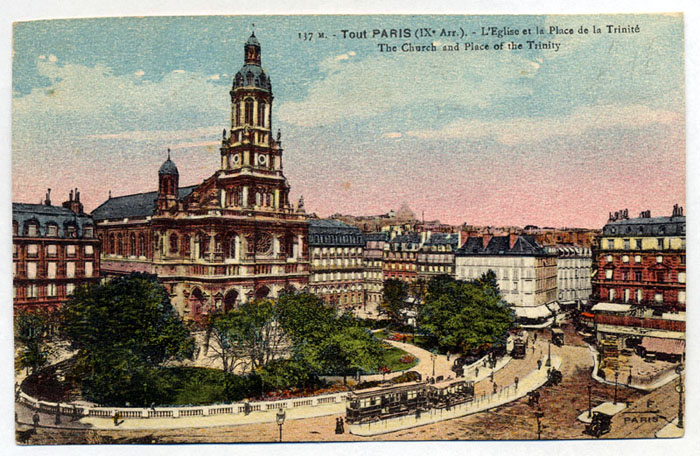
"Oh, yes, St. Trinite. I went there to hear Messaien improvise when I was in Paris with Hello Kitty. She was already sliding from the booze, coke and meth, and threw up in the park outside the church. During the concert she wandered off with some lesbians to score meth and I didn't see her again for three days. I was going to dump her then and there, but she begged me to take her back and I couldn't say no. Later in that trip we went to Berlin and wrote our names on the Wall."

"How was the concert?"

"What concert?"

"At St. Trinite. The one you went to see with Hello Kitty."

"Oh, that concert." Mr. Smiley pauses, and thinks about it. "It was nice."

Sunday, November 3, 2013

A Glass of Squashberry Juice

Standard Time has arrived, which pleases Mr. Smiley. Smileys do not observe Daylight Savings Time, or any other time, leading to the impression that they tend to arrive at events more or less at random. In many contexts this would be a problem, but so far as services at the Church of Irony this past summer it was not; at the Church of Irony, services never start at the expected time.

After services at St.Cecilia, Roderick and Molly cross the road to attend the Old Ivy Inn's Craft Beer Festival, held each year in the Ballroom. Everyone is admitted, regardless of age, since no beer is actually served in the Ballroom. Those who wish to be served must exit the Ballroom and enter the adjacent Oak Room; there, a sign declares that the Washington County Sheriff enforces state law on underage drinking. No doubt, this sign is sufficient to deter the law-abiding youth of Old Ivy College from imbibing unlawfully.

Glo Beer, the leading "cheap, but filling" beer brand, sponsors craft beer festivals in college towns around the country as part of its "Great American Beer" grassroots marketing campaign. There's an interesting story behind the rise of Glo Beer. Founded by Heinrich Hohenzollern in 1896 in Lake City and marketed under the Kaiser Beer brand, the company rebranded in 1918 as Goeringbrau in recognition of the famous World War I ace. Growing rapidly in the 1930s, the company expanded its Lake City brewery to offer Adolf Hitler Ale and Brownshirt Lager, which was adopted as the official beer of the German-American Bund.

In 1945, the company rebranded its Deutschland Uber Alles beer as Global Beer and discontinued all other brands. Sales grew rapidly in the postwar era thanks to a strong following among Lake City locals, closet Nazi sympathizers and the company's strong support for stock car racing.


In the 1990s, the company officially shorted the brand name from Global Beer to Glo Beer. This was shortly after Vevey Brands of Switzerland, the global food and drink conglomerate, acquired the company and introduced the long-running Gimme a Glo advertising campaign. Sales rose rapidly on the strength of this campaign, so that Glo is now the number #1 beer brand in the world, a point that is less remarkable when you consider that Vevey owns the #2 and #3 beer brands. Vevey also owns the #4 brand, Veldtbrau, which is sold only in Southern Africa, where it is widely used as currency.

Just inside the Ballroom, there is a cardboard cutout of Ricky Reckum Jr., who drives the famous "Blue Deuce" #2 car in NASCAR, sponsored by Glo Beer. Ricky is the most popular driver in NASCAR, though not because he is a particularly good driver; indeed, his only win came last year in the rain-shortened Lake City 400 when the red flag came out just after the top twenty cars pitted for fuel; at the time, Ricky was in twenty-first place. Ricky owes his popularity primarily to his appeal to the average NASCAR viewer, who identify with amiable and unintelligent people of little accomplishment; and also to his father, the legendary Ricky Reckum. The senior Reckum raced his Hudson Hornet with one hand and held a Global Beer in the other, periodically discarding empty cans out the driver's side window. One of these projectiles triggered the famous "Big One" at Talladega in 1968, which took every other driver out of the competition, leaving Ricky to coast home to victory. NASCAR later banned littering while racing, but by then Ricky had retired because his beer belly was too big to fit through the window of his Hudson.

The first table features the Redmeat brand attended by a bikini-clad booth babe. Roderick selects a colorful bottle. "What's this?" he asks.

"That's our Redmeat Seasonal Pumpkin Fudge Porter, says Booth Babe.

"Oh," says Roderick, returning the bottle. "Where do they make it?"

"The Glo Mega-Brewery in Lake City."

Roderick and Molly move on to the next table, also attended by bikini-clad booth babes and featuring Dirty Sweatsocks Objectional Ale.

"Aren't you chilly?" asks Molly of one of the booth babes.

Booth babe shrugs. Seeing Roderick select a bottle from the table, she points animatedly. "Flavored with rotten eggs!"

Roderick and Molly move on. The next table features Blammo! craft beer, which is sold in large bottles shaped like an erect penis. In a subtle touch, the booth babes wear bikinis that prominently feature the Blammo! logo on the front of their bikini bottoms.

Molly whispers to Roderick: "I think Megan likes this brand." Roderick chuckles.

Meanwhile, in Smileyville, Mr. Smiley pours himself a glass of squashberry juice.


Smileys, as a rule, prefer fruit juice to beer. It's not the flavor; they just like the pretty colors.

Sunday, October 27, 2013

Ainsworth, the Missing Tabby

Mr. Smiley has a new toy.

Meanwhile, Roderick is home for the car show at the Beaune Estate -- an annual event to which Beauneville denizens bring the cars they drive every day. Molly and Megan join him for the event.

Mr. Whitaker down the street wanted to buy this Hudson Hornet as soon as it arrived at Beauneville Motors. Mrs. Whitaker, however, demurred. "Too sporty," she said. Mrs. Whitaker is not known for being adventurous.
The Whitakers purchased this DeSoto instead, which they still own.
Mr. Ackerman, of the Ackerman's Market Ackermans, remains loyal to the Packard brand. Even after Packard merged with Studebaker and ceased production, Mr. Ackerman purchased this 1956 Packard Clipper, which is really just a Studebaker with Packard branding. "I would never buy a Studebaker," he huffs. To Mr. Ackerman, Studebakers are for the lower sort.
Mr. Van Zandt, the butcher, likes to work for Mr. Ackerman, but thinks his taste in cars is a little priggish. Mr. Van Zandt still drives his father's 1941 Studebaker.
When she was shopping for a car, Megan took this little number for a test drive before she settled on her 1964 Mustang. "I loved this car, but I'm too buxom to drive it," she laughs. Roderick ponders that, then agrees. This car is definitely not for the buxom.
Everyone admires Mr. Filbert's Hudson, but think he looks silly in a cowboy hat.
Mr. Wickett, of Wickett's Bazaar, owns one of two identical 1956 Oldsmobile Holidays owned by Beauneville denizens. (Miss Honeychurch owns the other, which she uses to drive her many cats to the vet).
Mr. Wickett likes to tell a funny story about this car. One day, when Dickie Wickett was about six years old, he saw Miss Honeychurch's car parked in front of Zeppelin Drugs. Thinking it was the family car, he opened the back door and released about a dozen cats, who promptly ran in every direction.

Officer Grady -- not the Officer Grady we know, but his dad -- was right there, and yelled "Hey! This is not your father's Oldsmobile!" Years later, Grady wanted to sue General Motors over this advertisement, but Mr. Barrister convinced him the lawsuit was a no-hoper.
Mr. Wickett loves to tell that story, and cracks up whenever he tells it. Molly doesn't get it. And Dickie gets a little tired of hearing about it.

Miss Honeychurch isn't amused, either. She recovered most of the cats, but Ainsworth never returned home. For some years afterwards, Beauneville residents reported Ainsworth sightings, but all were apocryphal.

Sunday, October 20, 2013

The Conditional Conjunction

Every college has a policy governing the use of alcohol and illegal drugs. Every college except Old Ivy which, true to form, does things its own way. The matter is up for discussion in today's quarterly Board meeting. Appropriately enough, the Board meets in the Board Room.

"Good morning gents, and madam," says Board Chairman Mr. Fuddle, nodding to Miss Token. Miss Token, who is part black, part Hispanic, part Native American and bisexual is actually highly valued for her strategic contribution, since Old Ivy makes no effort at all towards diversity. She is also hot, and prefers short, tight skirts.

"Good morning!" says Miss Token. The other members of the Board also respond, with varying levels of enthusiasm.

Mr. Fuddle proceeds with the first order of business. "I received a letter last month from the Association of College and Universities. It says we should take a hard look at policies on binge drinking and take active steps to promote safe and legal use of alcohol."

"Do we have a policy on binge drinking?" asks Miss Token.

"Yes," says Mr. Gruff of the Philosophy faculty and Dean of Student Life. "Our policy is that we don't care what students do as long as they don't disrupt the exams. lectures, seminars, concerts or other college events. And if they do disrupt those things we don't care if they do so because of alcohol or drug use, we just throw them out on the first offense."

"That works for me," says Miss Token. There is general assent from the other members.

"What about drinking in students' rooms?" asks Mr. Billabong, who is new to the Board.

"Technically," says Mr. Armstrong, of the Political Economy faculty and Dean of Residence Life, "we don't own the rooms since we went condominium ten years ago. The South Quad Condominium Association has rules, which they post, and advises that state law prohibits underage drinking unless one of the exceptions applies."

"Exceptions?" Clearly, Mr. Billabong isn't up on the details of state law governing underage drinking.

Mr. Armstrong sighs. "The Condominium Association tells the students that underage drinking is prohibited except on private property (taverns and liquor stores excepted), for religious purposes, for medical purposes, for educational purposes, for government work or with parental consent."

"Gosh," says Mr. Billabong. "That's a lot of exceptions! How do you enforce them all."

"We, the Members of this Board and the employees of Old Ivy College, don't enforce them at all," responds Mr. Armstrong. "The South Quad Condominium Association, a legally separate entity with no connection to Old Ivy College except that the same individuals serve on both Boards and meet consecutively in this room, enforces the policy. I should note, however, that the Condominium Association has no employees other than Mr. Featherton, who runs the annual online auction."

"What about the police?" asks Miss Token.

"Sheriff Nottingham in Stapleton or one of his deputies will respond if there is a disturbance. We had one back in 1982, when Figgie Gordon chained himself naked to the Thinking Tree to protest what he said was an absence of thought."

Mr. Fuddle interjects. "Thank you for that briefing, Mr. Armstrong. Any other comments or questions on this issue?"

"What about Federal law?" asks Miss Token. You can always count on Miss Token to bring up questions of Federal law.

"Well," says Mr. Armstrong, warming to the subject, "the Department of Education publishes rules under Title IX, and we would have to comply with them if we had a varsity athletic program."

"If," says Mr. Gruff, with emphasis on the conditional conjunction, "we had a varsity athletic program."

"But...we don't have a varsity athletics program," says Miss Token.

"Exactly," says Mr. Armstrong. "There are also rules governing colleges and universities that accept Federal research grants or disburse Federal student grants and loans, and we would have to comply with those IF we accepted Federal research grants or disbursed Federal student grants and loans."

"I get it!" laughs Miss Token. "IF we did that stuff. But we don't!" There is a round of laughter from the other Members.

Meanwhile, in his room, and with his parents' consent, Roderick pours himself a glass of Beauneville Ale. Mr. Smith likes to say that Roderick can also qualify under the religious exception, as he is a practicing member of the Church of Occasional Beer; and the educational exception applies as well, since it is important for a youth to know how to drink a beer.

Beauneville Ale, a product of the Beauneville Brewery, has a special secret ingredient that gives it a unique flavor. I'd tell you what the ingredient is, but it's a secret. It's not pumpkin.

Sunday, October 13, 2013

Are You Molly Bloom?

Today is the twentieth Sunday after Trinity. In the St. Cecilia Chapel, Mr. Mendelssohn leads the Old Ivy Bach Chorale in today's cantata, J.S. Bach's BWV 180, Schmücke dich, o liebe Seele (Adorn yourself, oh dear soul). Mrs. Dowager sings the alto solo, a ringer sings the tenor solo, Zack sings the bass solo and Emily Scharf sings the soprano solo with Zack's hand firmly planted on her buttocks. Fourth year Philosophy student Mädchen Smith delivers the inspirational message for today, Adorn yourself at Forever 21.

The children of Beauneville gather in a circle for Sunday Reading Time. Dorabella squeezes her ample bottom into the Reading Chair and continues to read from The Blue Trolley.
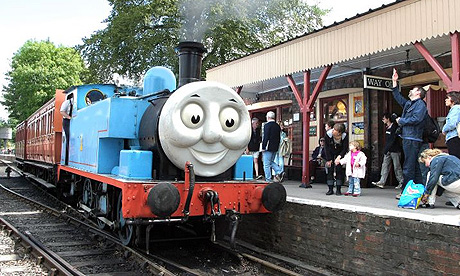
At the station, the Blue Trolley waited patiently for Fred and his Dad to return from the ice cream parlor. Thomas the Tank Engine rolled up the adjacent track pulling two coaches and stopped.
Dorabella holds the book aloft to show the picture.
She continues to read.
"Good morning!" said Thomas.

"Clang, clang!" said the Blue Trolley.

Thomas pulls out an iPhone. "Look at me!" he says. "I'm texting!"

"Clang, clang!" said the Blue Trolley.

Thomas held the phone at arms length and took a selfie. "See?" he says, showing off the picture.
Another picture.
Back to the story.

"Clang, clang!" said the Blue Trolley.

Thomas the Tank Engine chuffed away. Just as Fred and his Dad returned from the ice cream parlor, The Little Engine That Could Arrived. "Good morning!" said The Little Engine That Could.

"Good morning!" said Fred.

"Good morning!" said Fred's Dad.

"Clang, clang!" said the Blue Trolley.

"Where are you going?" asked Fred.

"I am going to pull this train of good food and toys over the mountain to the little children on the other side."

"Are you sure that's possible? All those big engines over there said it can't be done."

"Well, poop on those fuddy-duds. I will just say 'I think I can, I think I can, I think I can' over and over again and pull this long train of good food and toys over the mountain to the children on the other side."

"That is ridiculous Bergsonian twaddle," said Fred. "Your ability to pull that train over the mountain depends solely on the tractive effort you can produce, which depends on the power transmitted to your driving wheels and the factor of adhesion. If the mass of the train exceeds your tractive effort on the steepest grade, you will roll backwards down the hill. The forces of physics are not affected by the content of your train or the needs to the intended recipients."

"Well," said The Little Engine That Could, "that's your opinion." He tugged on the train and started to roll out the station. "I think I can, I think I can, I think I can..."

About ten minutes later, the train rolled backwards into the station, The Little Engine That Could still coupled to the front but clearly exhausted. He said nothing.

"See?" said Fred.

"Clang, clang!" said the Blue Trolley.

Fred his Dad boarded the Blue Trolley and they departed.

"Are we heading home?" asked Fred.

"Clang, clang!" said the Blue Trolley. "Clickety-clack, clickety-clack, clickety-clickety-clack!"

Soon, they arrived at the station on Duck Pond Road, near their house.

"Goodbye, Blue Trolley!" said Fred.

"Clang, clang!" said the Blue Trolley.

Fred's Dad drove home, taking care to avoid small children and pets playing in the street. He parked the Packard in the shade of the squashberry tree, which groaned with fruit. Mom met them at the front door, and so did Zeppelin, Mr. Wuffles and Spot, who pushed Not A Bunny's wheeled aquarium.

"Hello, everyone!" said Fred.

Then everyone played tag, which was great fun for everyone but Not A Bunny, who had no way to tag anyone back so he was always "it".
Dorabella puts the book down. The gathered children clap happily.

Meanwhile, Molly Bloom sits and reads in the Student Union beneath Natasha's recently installed mural, which is aptly named Molly Bloom's Moist Pink Vagina. Another student -- Molly recognizes him from Rhetoric class -- approaches the mural, gazes at it intently.

"Excuse me," he says to Molly, "you're Molly Bloom, aren't you?"

"No," says Molly.